
A Guide to Must-Visit Attractions near Karaganda
The Karaganda region is rarely seen as a tourist destination. Its history is complex and at times dark, while its landscapes may seem ordinary at first glance. Yet forests, ancient necropolises, meteorite craters, and abandoned military grounds are all hidden among the endless steppes, waiting to be discovered.
Echoes of Repression
Visiting the Karaganda region inevitably involves confronting its difficult past. Under Stalin’s regime, millions across the Soviet Union suffered political repression. People were imprisoned, exiled, or executed for real or imagined opposition to the state. Central to this system was the Gulag, an extensive network of forced labor camps.
One of the most significant sites in the region is the Museum of Remembrance of the Victims of Political Repression in the village of Dolinka, about 30 km (19 mi) from Karaganda. The museum occupies the former headquarters of Karlag, one of the largest camps in the Gulag system. Karlag operated from 1930 to 1959, confining scientists, engineers, soldiers, clergy, and even women with children. Nationality or age did not matter. The rule was simple and merciless: maximum labor with minimal rights.
The museum’s exhibits portray the daily lives of prisoners, the structure of the Gulag camp system, and the human cost of state repression.
Just 3 km (1.9 mi) from the museum lies the Mamochkino Cemetery, where children born to imprisoned women in Karlag are buried.
Another place of remembrance is the Spassk Memorial Cemetery, 90 km (56 mi) south of Karaganda, near the village of Spassk. Here rest prisoners of war, internees from World War II, and victims of political repression. Those buried include Romanians, Austrians, Poles, Italians, Finns, Czechs, Slovaks, and Hungarians. Today, monuments erected by the countries of the deceased honor their memory.
Granite Cliffs and Pine Forests
Karkaraly National Park is one of the region’s most beloved spots to recharge. Pine forests, layered granite rocks, and fresh air make it perfect for hikes and nature getaways. Accommodation ranges from guest houses and resorts to campsites, offering options from comfortable to as close to nature as possible.

Among the park’s most famous sites is Devil’s Lake, shrouded in legends and tucked amid forests and rock formations. Near the Shakhtyor resort lies Pashenoye Lake, popular for swimming and fishing in the summer. Lake Bassein, or Swimming Pool Lake, is nestled between sheer cliffs and earns its name from its unusual rectangular shape.
Active hikers shouldn’t miss Komsomol Peak, the park’s highest point and a favorite destination for trekking. The park also features an enclosure with bison and deer. Nearby, in an old wooden building, visitors can explore the Museum of Nature.
The town of Karkaralinsk, the closest settlement to the national park, is worth a stop too. A notable landmark is the Kunanbay Mosque, built by the father of Abay Kunanbayev, Kazakhstan’s renowned poet and philosopher.
About 40 km (25 mi) southeast of Karkaralinsk lie the ruins of Kyzyl-Kent Palace, believed to be the remains of a 17th-century Buddhist monastery.
From Steppe to Sparkling Water
Lake Balkhash is the Karaganda region’s main beach destination. Its warm turquoise waters and sandy shores defy the stereotype of Central Kazakhstan as monotonous and featureless.
Most resorts and guesthouses are concentrated in the villages of Shubartyubek and Torangalyk. We have compiled a detailed guide to these holiday areas, complete with contacts and descriptions.
The town of Balkhash itself is often treated merely as an overnight stop but that would be a mistake. Spending at least half a day here lets you explore the abandoned Orbita space communications station, the T-34 tank monument, the city’s pioneer memorial, and the Locomotive #48-80 installation.
Another reason to venture beyond the beach is the Bektau Ata Tract, about 70 km (43 mi) north of Lake Balkhash along the Karaganda highway. Amid the flat steppe, a mountain rises unexpectedly. Bektau Ata is a “failed volcano”. The earth’s crust bulged, but no eruption occurred. Over time, this created cliffs with water collecting in natural hollows. Today, it is one of the most photogenic spots in the region and a magnet for rock climbers and lovers of unusual landscapes.
Temirtau: Beyond Smoke and Steel
Temirtau is a major industrial center just a few dozen kilometers from Karaganda. The city is best known for the Qarmet metallurgical plant, formerly ArcelorMittal, and its troubled environmental reputation. Yet a visit here proves far more diverse than stereotypes suggest.
One of Temirtau’s most unexpected sights is the Winter Garden where palm trees, ferns, and other tropical plants thrive. Nearby, a terrarium houses spiders, reptiles, and insects. The contrast between heavy industry and this pocket of greenery is striking and memorable.

Temirtau is also closely tied to the early biography of Nursultan Nazarbayev, who began his career in the city. The First President’s Historical and Cultural Center explores this period of his life.
The local history museum offers a broader view of Temirtau’s past. Cultural landmarks such as the Palace of Culture, a mosque, and an Orthodox church are also worth exploring.
The Highest Point of Saryarka
We return to nature and straight to the highest point. About 280 km (174 mi) southeast of Karaganda rises the Kyzylarai mountain range, home to Mount Aksoran, the highest peak of Saryarka at 1,565 m (5,135 ft). For Central Kazakhstan, this is a truly impressive elevation.
Alongside Aksoran, Karasoran Peak and the Tesiktas rock formation stand out. The landscapes here are diverse. Bare rocky slopes dotted with tenacious pine and juniper give way to valleys where birch trees grow alongside rose hips, hawthorn, raspberries, and currants. Those who venture deeper into the mountains may even spot argali, the wild mountain sheep native to the region.
Most travelers stay in the village of Shabanbai Bi, where locals rent out rooms and entire houses. In 2025, the village was named one of Kazakhstan’s top five ecotourism destinations and went on to represent the country at the UN Tourism Best Tourism Village competition.
Kyzylarai is remarkable not only for its scenery but also for its deep historical layers. Ancient settlements and necropolises have been preserved here. The most famous is the Begazy necropolis, dating back to the 12th-8th centuries BC. Its burial structures, built from massive granite slabs, resemble stone pyramids. A similar monument can also be seen near the village of Taldy, much closer to Karaganda.

Off the Beaten Path: For True Explorers
The Bugyly Mountains are perfect for those seeking solitude. Far from cities and major highways, they see few visitors. These low, almost treeless mountains are covered with sparse, wind-shaped vegetation. But in return they offer sweeping views stretching for tens of kilometers and an endless sky.
About 120 km (75 mi) east of Karaganda lies the Altyntobe deposit, known for the rare dioptase mineral, often compared to emerald for its color. Highly prized by collectors, this stone is too fragile for cutting or use in jewelry.
The Shunak crater is one of only four confirmed meteorite craters in Kazakhstan. Scientists believe the impact occurred between 35 and 55 million years ago, though some researchers suggest a younger age of around 12 million years. The crater is clearly visible on satellite images and from drones. It reaches up to 400 m (1,312 ft) in depth and about 3 km (1.9 mi) in diameter.
Nearby stands the mausoleum of Agybay Batyr, a prominent leader of the 1837-1847 national liberation uprising against the colonial policies of the Russian Empire.
For a quick nature escape without traveling far, Korneyevka (Kerney) is a convenient option. Just beyond the village, forests and rocky outcrops begin, strongly resembling the landscapes of Karkaraly National Park. Korneyevka lies 110 km (68 mi) northwest of Karaganda. Follow the highway to Botakara, then turn left onto the P27 road.
Another “mini-Karkaraly” can be found in the Ku Mountains, near the village of Egindybulak. Here, rocky hills blend with both coniferous and deciduous forests, creating landscapes that feel unexpectedly lush for the steppe.

Just 2 km (1.2 mi) north of the village of Aksu-Ayuly lies a complex of more than 40 burial mounds. Four have been excavated, yielding patterned pottery, bronze beads, and a gold necklace. The shapes and ornamentation of the vessels are typical of the Andronovo and Begazy-Dandybay cultures.
West of the village of Agadyr rise the Ortau Mountains, reaching elevations of up to 1,070 m (3,510 ft). Several lakes are scattered across the range, and in spring the slopes bloom with Schrenk tulips. The area is rich in Bronze and Iron Age archaeological sites and is also home to a local natural landmark: the Jetykuduk cascade of lakes.
About 40 km (25 mi) east of the city of Balkhash lies a grove of relict turanga – a remarkable tree capable of growing on salt marshes and poor soils. Turanga even endured the Ice Age, and it is no surprise that locals regard these trees as sacred.
Another natural highlight is the Karaagash Tract in the Osakarovsky District, part of Buyratau National Nature Park. This area is known for its relict black alder forests, rare for the steppe zone.
To explore the region’s main city, see our article “A Guide to Must-Visit Attractions in Karaganda”, which is the continuation of this guide and completes the picture of the region.
Recommended tours:
All offers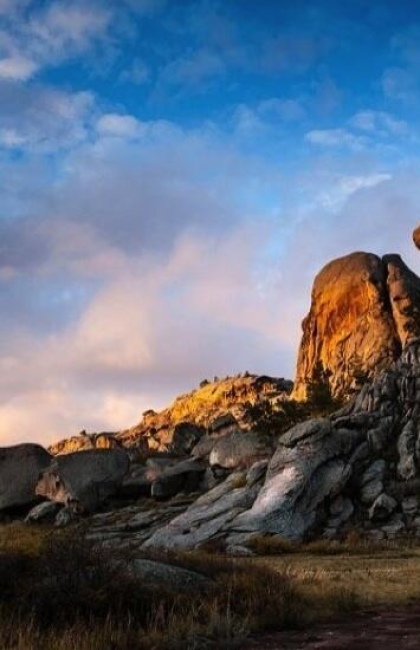
On request
This journey will take you to the gems of Central Kazakhstan, including Karkaraly National Park, the Bronze Age Kent settlement, Scythian burial mounds, and the remnants of the ancient Buddhist temple known as Kent Palace.
On request
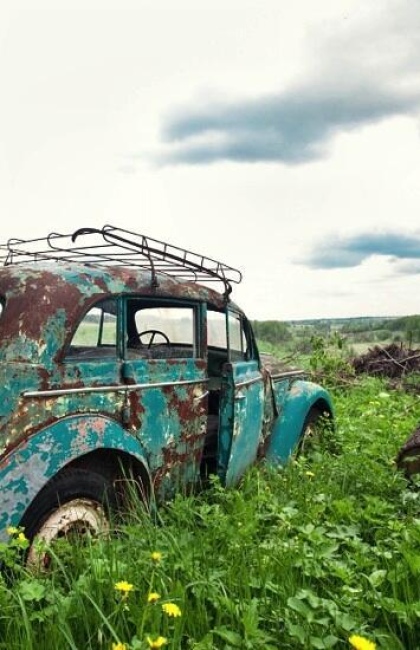
Embark on an exploration of the Soviet legacy on Kazakh soil! This tour takes you to the infamous labor camps of the Stalin era, Karlag and Alzhir, the Semipalatinsk nuclear test site, and various other landmarks from the Soviet era.