
A Guide to Must-Visit Attractions in the Zhambyl Region
In the Zhambyl Region of Kazakhstan, history is everywhere. Ancient mausoleums, settlements, and petroglyphs dot the landscape, revealing how people lived centuries ago.
Nature is just as striking. Sandy deserts give way to mountain gorges and snow-capped peaks. The foothills of the Karatau, Talas, and Kyrgyz Alatau mountains are perfect for hiking, mountaineering, and outdoor adventures.
Taraz, the region’s administrative center, is considered Kazakhstan’s oldest city, with a history of over 2,000 years. We have a separate article dedicated to Taraz’s sights. Here, we’ll focus on the must-see attractions beyond the city.
Merke: Ancient Settlement, Sanctuary, and Spa Retreat
About 150 km (93 mi) east of Taraz lies the village of Merke, one of Kazakhstan’s oldest settlements. Merke was first mentioned in Arab writing in 945 AD as a wealthy and well-developed town. Then, it occupied a key position at the crossroads of trade and cultural routes.
South of the village, nestled in the mountains, is the Merke balneological resort along with several smaller spas offering radon mineral water treatments. Thanks to the unique composition of the springs, visitors come here to rejuvenate and enjoy a peaceful getaway from city life.
Not far from the resort, deep in a mountain gorge, is the Merke Cave. Hermits (possibly Nestorian Christians) have lived here since the Middle Ages. Over time, the cave also served as a refuge, sheltering the elderly, women, and children during enemy raids.
Further into the mountains, in the Karakystak Valley, lies a remarkable sanctuary with a thousand-year history. Turkic nomads once used this site for rituals. Today, there are over 170 burial mounds and graves, along with around 70 balbals (stone steles shaped like humans) dating from the 6th to 14th centuries.
Ancient Cities
The Zhambyl Region is a key area for medieval urban culture in Kazakhstan. Major branches of the Silk Road passed through this region. Cities emerged along these routes and flourished for centuries. Many later disappeared, leaving behind archaeological sites that still spark debate among scholars today.

About 45 km (28 mi) east of Taraz is the Akyrtas archaeological site, the ruins of a complex built in the 8th-9th centuries. Its purpose remains a mystery. Some believe Akyrtas was a Buddhist temple or a Nestorian monastery. Others suggest it may have been an Arab palace. This theory is supported by the ruins of a mosque found on the site.
To the south of Shu, near the Kyrgyzstan border, lies the Aktobe settlement. This city existed from the 6th to the 13th centuries and thrived under the Turkic and Karluk Khaganates. Since 2014, Aktobe has been included in Kazakhstan’s list of UNESCO World Heritage Sites. Some researchers suggest that the ancient city of Balasagun, the Karakhanid capital, was located here, though others argue it was in present-day Kyrgyzstan.
On the western outskirts of Karatau are the ruins of Tamdy, a city that existed between the 6th and 12th centuries. Surviving foundations of homes, a citadel, and two small towers reveal the structure of a medieval fortified settlement.
East of Taraz, on the northeastern outskirts of Kulan, lies the medieval settlement of Kulan. Its territory is scattered with dozens of mounds – remnants of ancient estates and buildings. In one structure, archaeologists discovered painted walls depicting the sun, flowers, warriors, and anthropomorphic figures, a rare find for the region.
The Zhambyl Region is home to many other ancient settlements, though most survive only as fragments of walls and foundations. These sites hold great value for archaeologists and historians, but are generally of limited interest to tourists, so they are not covered in this article.
Sanctuaries and Petroglyphs
The Zhambyl Region is rich not only in ancient cities but also in sacred architectural monuments, necropolises, and rock carvings.
Just 20 km (12 mi) from the center of Taraz, in the village of Aisha-Bibi, stand two of southern Kazakhstan’s most important landmarks: the mausoleum of Aisha Bibi and the mausoleum of Babaji Khatun. Both were built in the 12th century during the height of the Karakhanid Empire. The structures survive in a severely dilapidated state, and the appearance visitors see today is the result of restoration work. Despite this, the site remains a significant historical and spiritual center, drawing pilgrims and travelers.

Near the village of Saudakent, about 160 km (100 mi) northwest of Taraz, is a memorial to Ykylas Dukenuly, a renowned composer, and kobyz player. Notably, Ykylas Dukenuly is not buried here; his grave is on the banks of the Chu River in the small village of Kuaral. The memorial at Saudakent contains only a small amount of soil brought from his actual burial site.
Also in Saudakent is the Shokai Datka Mausoleum, built in 1856-1857. Shokai Datka is remembered as a key participant in the liberation movement against the Kokand people and as a Kazakh leader who supported union with Russia.
East of Taraz, in the Chu River valley, lies the Jaisan Sanctuary – a vast complex of Turkic religious memorials spread across a wide area. Visitors can explore balbals, rock carvings, and funerary structures from various historical periods.
A few kilometers east of Taraz, the Karasai Gorge is home to remarkable petroglyphs depicting birds, camels, argali, deer, ibex, tigers, lions, roe deer, bulls, and humans. These carvings offer a glimpse into the animals that once roamed the region. Nearby is the Botamoinak Cave, whose walls are also covered in ancient rock art.
Mosques
The Zhambyl Region’s Islamic architecture includes not only modern religious buildings but also historical mosques. In the village of Usharal, about 140 km (87 mi) north of Taraz, stands the Abdullah Ishan Mosque, built in 1906.
In the neighboring village of Oiyk is the Karakoja Mosque, constructed in the early 20th century. Its architecture echoes the style of medieval buildings in Bukhara and Samarkand, and its fired-brick construction gives the mosque a distinctive, monumental appearance.
Natural Treasures
The Zhambyl Region amazes with its diverse landscapes: sandy deserts, high-mountain gorges, alpine meadows, and forests all coexist here. These areas are not only fascinating but also perfect for adventure tourism and outdoor activities.
South of Taraz stretches the vast Moiynkum Desert. Visitors can enjoy jeep tours, picnics, and walks among the sand dunes from May to October. After rains, mushrooms often appear in the desert. Once, mushroom pickers even discovered a giant 17-kilogram (37 lbs) specimen! The Umbet Hunting Ground and the Andasai Nature Reserve, both located in Moiynkum, are home to kulan, argali, saiga, goitered gazelle, wild boar, roe deer, and other wildlife.
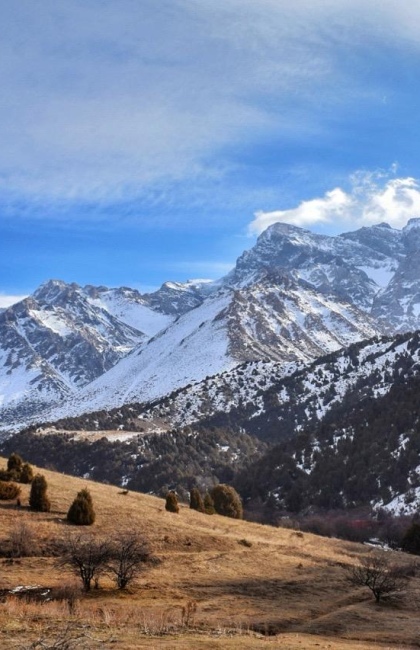
The southern part of the region is dominated by the Talas Alatau and Karatau Mountains, while the Chu-Ili Mountains stretch to the east. These ranges are dotted with picturesque gorges. About 90 km (56 mi) southwest of Taraz lies the Koksai Gorge, carved by the Koksai River. It marks the easternmost point of the Aksu-Jabagly Nature Reserve. In the gorge’s lower reaches, tugay forests and sparse juniper woodlands thrive. Rare and endangered plants grow here. Higher up, the landscape transitions to subalpine meadows. Koksai Gorge is a popular destination for tourists, climbers, and paragliders.

The gorge’s main attraction is Lake Koksai, situated at an altitude of 2,542 meters (8340 ft). A well-maintained trail now makes access much easier.
Slightly west of Koksai Gorge lies the Aksai Gorge, where an icy mountain river winds through slopes rich with medicinal herbs and mixed forests. This gorge is part of the route to Sarytau Peak, which rises to 3,650 meters (11975 ft).
Not far from the Akyrtas archaeological site lies the Uzynbulak Gorge and the Sulutas Rock, a vertical cliff approximately 70 meters (230 ft) high. The rocks here are covered with numerous ancient paintings. Local tour companies often organize day trips to explore this site.
To the west of Taraz, near Lake Bilikol, is the Berikkara Tract, officially recognized as the birthplace of tulips. While it is well known that tulips originated in Kazakhstan, few realize that the Berikkara Tract was their very first home.
Near the village of Kaindy lies the Makpal Gorge, where the upper mountainous section preserves relict tugay forests with rare endemic species, including Talas and Tien Shan birch, as well as wild Sievers apple trees and Regel pears. Higher up the slopes, alpine and subalpine meadows begin, creating yet another striking natural zone in the region.
Recommended tours:
All offers_420x650_4ab.jpg "Ancient Cities of Kazakhstan Tour")
On request
South Kazakhstan boasts numerous ancient cities. It is a treasure trove of historical monuments unparalleled anywhere else in the country. If you are passionate about history, legends, and mysteries, this journey is for you!
_420x650_4ab.jpg "Turkistan and Aksu-Jabagly Reserve Tour")
On request
Embark on this tour to delve into the historical monuments of the South Kazakhstan region, coupled with an exploration of Aksu-Jabagly, the country's oldest nature reserve.
On request
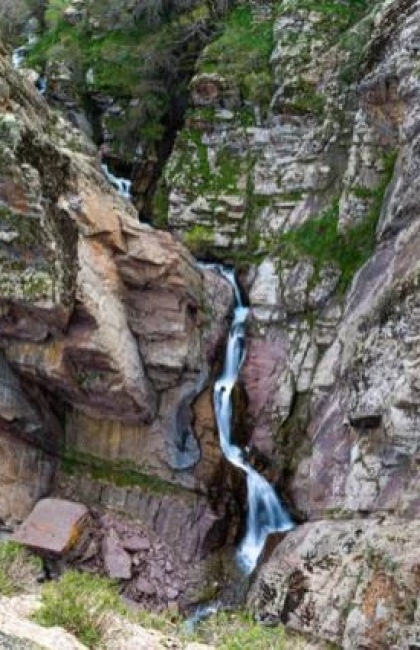
Trekking route in the Aksu-Jabagly Nature Reserve. The trail winds through a scenic gorge, culminating at a stunning waterfall framed by mountain peaks.
On request
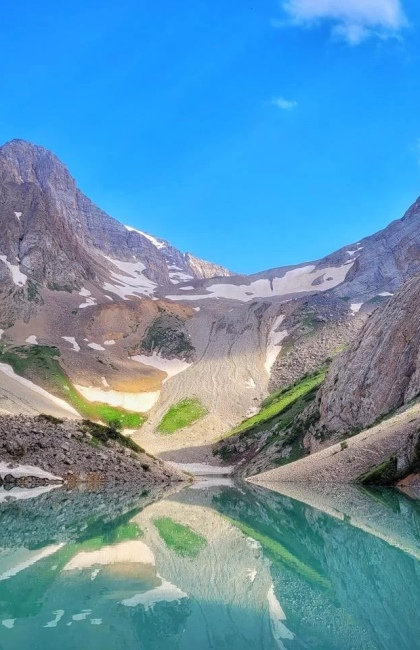
A 20-kilometer trek to the jewel of Sairam-Ugam National Park – Lower Sairam-Su Lake. The route is moderately challenging, with winding paths and a few steep climbs along the way.
On request
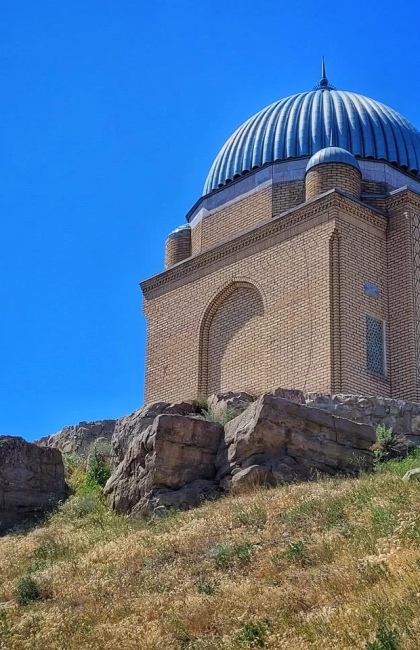
Taraz is a city with over 2,000 years of history, once a key hub along the ancient Silk Road. The city and its surroundings are rich in historical and architectural monuments, offering a glimpse into its storied past.
On request
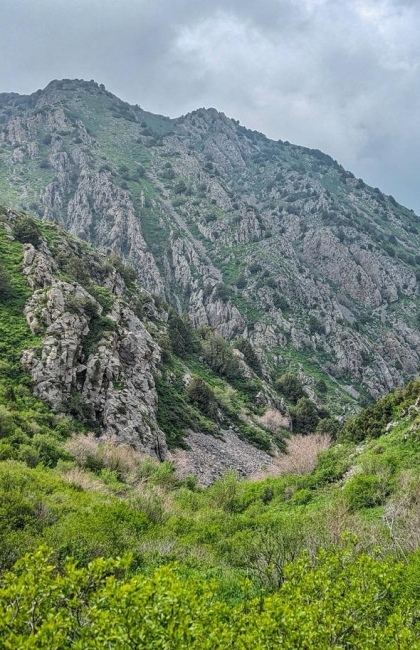
An easy route in one of the most picturesque areas of the Aksu-Jabagly Nature Reserve. The trail follows the river, winding through a lush deciduous forest.
On request
Join a one-day tour to the Sazan Ata Gorge near Shymkent. Hike along a scenic trail surrounded by towering rock formations and lush greenery.
On request
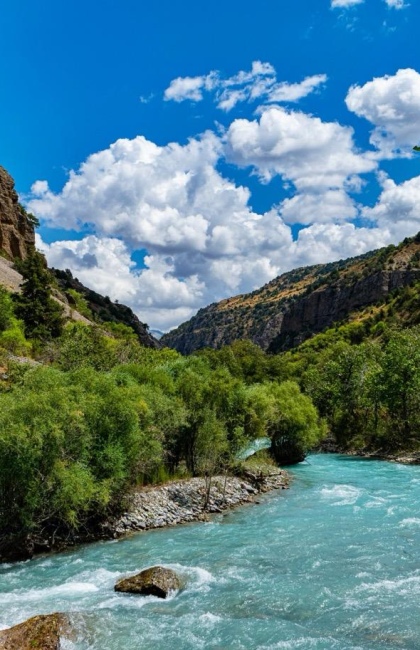
Aksu Canyon is the deepest and most stunning canyon in the Turkistan region. Its towering, sheer walls drop for tens, even hundreds, of meters, while the powerful Aksu River roars at the canyon’s base.